

2015 | Budapest
Interior architect: Szén Molnár Tamás
Associate architect: Vaszkó Barbara Réka
Premium Airbnb Apartment – Downtown Budapest

Designing the interior of a downtown Budapest Airbnb apartment requires a different approach from creating a conventional home. The space needs to feel immediately welcoming and intuitive for a wide range of guests while retaining a distinctive and memorable character. Practical use of space, durable materials and ease of use are essential, without allowing the apartment to become an impersonal accommodation.
The interior design concept of this apartment on Visegrádi Street in Budapest is therefore based on clear spatial organisation and a restrained, timeless material palette. Within the relatively compact floor area, the different functions are organised not primarily by walls, but through built-in furniture, changes in materials and carefully considered proportions.
A defining element of the apartment is the dark-toned wood panelling and the custom-designed built-in furniture connected to it. The large continuous timber surfaces conceal storage and structure the space, while creating a strong visual contrast with the light walls, flooring and kitchen cabinetry. The warmth of the wood and the calmness of the neutral surfaces establish the character of the interior, complemented by a few subtle colour accents that give the apartment a more individual atmosphere.

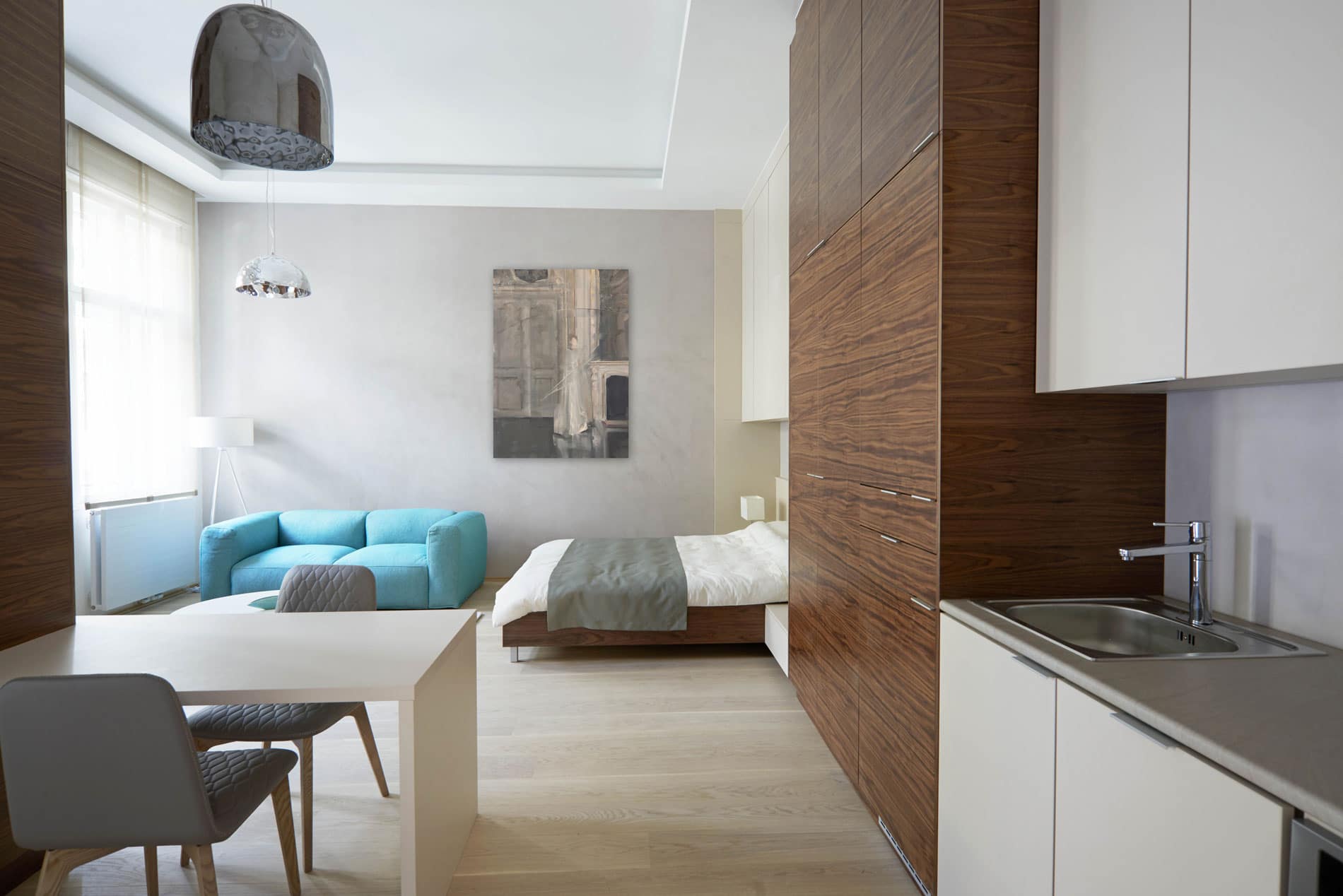


An important consideration throughout the design process was to prevent the compact apartment from feeling overcrowded. Much of the storage was therefore integrated into the walls and custom-built furniture. The sleeping area, kitchen, dining space and workspace are visually connected while remaining clearly identifiable functional zones. Rather than appearing as isolated objects, the furniture and built-in elements contribute to the proportions, usability and visual order of the entire space.
The generous ceiling height, original doors and windows, and natural daylight are important architectural qualities of this downtown Budapest apartment. Instead of concealing these existing features, the design aims to make use of them. The contemporary interior elements relate quietly to the character of the building, while the walnut-toned wood introduces rhythm, warmth and depth among the lighter surfaces.
An Airbnb apartment must respond to the needs of guests whom the designer cannot know in advance. The interior therefore needs to work naturally for people of different ages, cultural backgrounds and lifestyles. Rather than relying on strongly defined stylistic gestures, the design focuses on proportion, materials, light and the intuitive use of space.
The result is a compact, contemporary Budapest apartment in which functionality and atmosphere are treated as parts of the same design. The built-in storage, bespoke furniture, kitchen, lighting and material palette form a coherent interior architectural system. The aim was to create a calm and timeless space that does not function as a stage set, but as a genuinely usable apartment – a place that guests can temporarily experience as their own.